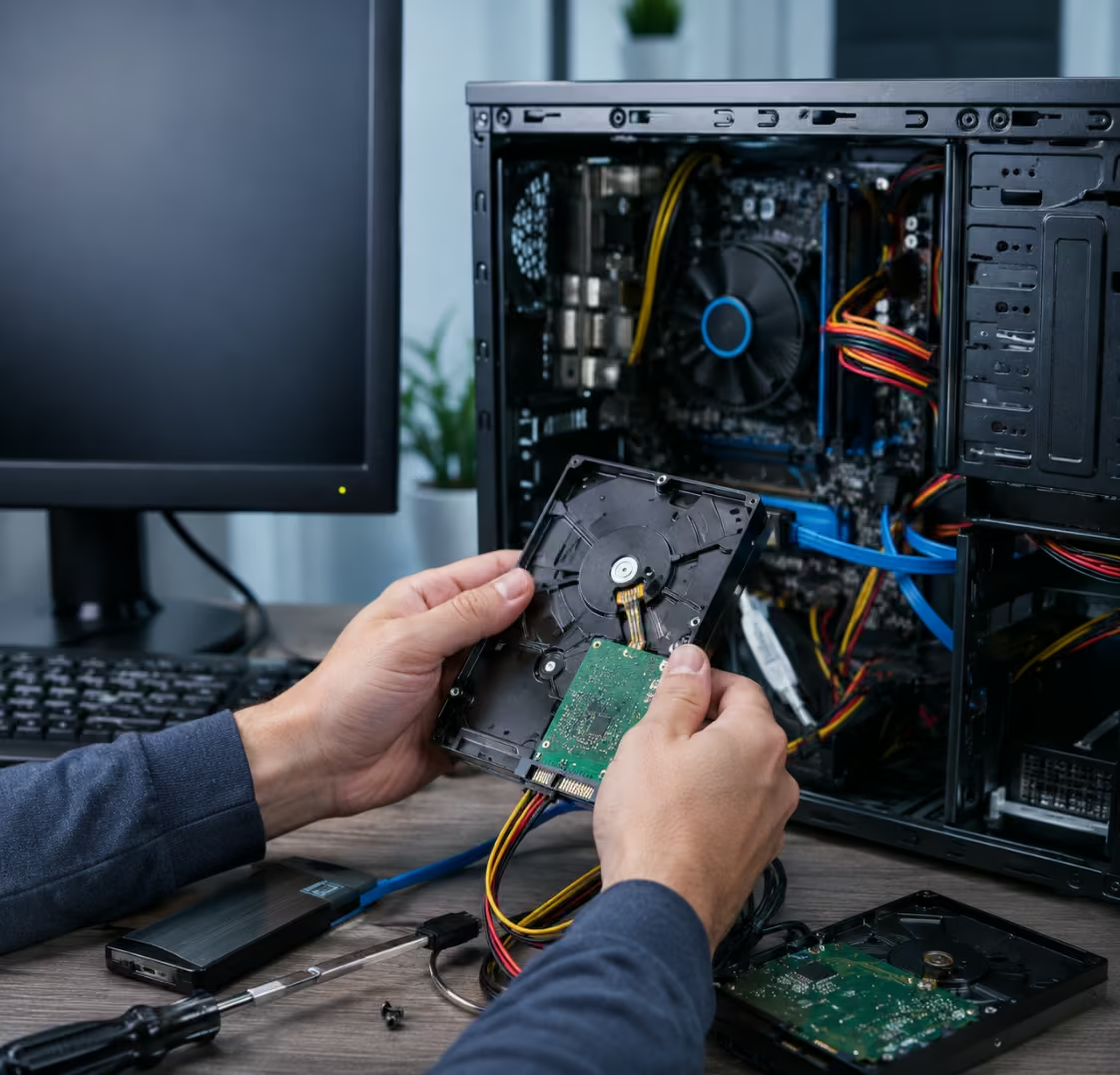

Mid-sized enterprise faced sudden RAID failure, losing access to critical accounting, client, and operations data.
Confidential Business Client
Kochi, Kerala, India
Critical Business Data Restored After RAID Failure
Businesses depend on RAID storage systems to manage and protect critical data, but RAID arrays are not immune to failure. When a RAID system becomes inaccessible, organizations can suddenly lose access to financial records, databases, project files, customer information, and operational data. This case study highlights how data restored after RAID failure helped a business recover vital information and resume normal operations with minimal disruption.
RAID Failure Can Happen Without Warning
RAID technology is designed to improve performance and provide redundancy, but it cannot eliminate every risk associated with data loss. Hardware failures, multiple disk failures, controller issues, power interruptions, firmware corruption, accidental configuration changes, and human error can all cause RAID arrays to fail.
In this case, a growing business experienced a sudden RAID storage failure that made critical company data inaccessible. Employees could no longer access essential files, reports, and project documents needed for daily operations. The organization faced the possibility of severe downtime and potential data loss if the information could not be recovered quickly.
The successful outcome demonstrated that professional intervention can often result in data restored after RAID failure, even when the storage system appears completely unusable.
Initial Signs of the RAID Problem
The business first noticed issues when users began reporting inaccessible shared folders and server errors. Shortly afterward, the RAID array entered a degraded state and eventually became offline.
Common symptoms included:
- Missing shared folders
- Server performance problems
- RAID degradation alerts
- Unavailable databases
- File access errors
- Failed RAID rebuild attempts
- System startup issues
Because the company’s operations relied heavily on the RAID server, restoring access to the information became a top priority.
Immediate Action Prevented Further Damage
One of the key factors that contributed to the successful recovery was the decision to stop using the RAID system immediately after the failure.
Many organizations unintentionally worsen the situation by attempting repeated rebuilds, replacing drives without proper analysis, or reinitializing arrays. These actions can overwrite critical metadata and significantly reduce the likelihood of successful recovery.
Instead, the affected RAID system was taken offline and submitted for professional evaluation. This decision greatly improved the chances of achieving data restored after RAID failure without unnecessary complications.
Comprehensive RAID Assessment
The first stage of the recovery process involved a detailed examination of the RAID environment.
Our specialists analyzed:
- RAID configuration
- Disk health status
- Controller information
- RAID metadata
- Drive sequence order
- File system integrity
- Array structure
The assessment revealed that multiple issues had affected the storage environment simultaneously. Several drives were experiencing problems, and the RAID structure could no longer be assembled correctly using conventional methods.
Despite these challenges, the underlying business data remained recoverable.
Advanced RAID Recovery Process
Recovering information from a failed RAID system requires far more than simple file recovery software. Every RAID array stores data differently depending on its configuration, making specialized reconstruction techniques essential.
To achieve data restored after RAID failure, our recovery team performed a structured recovery procedure.
RAID Structure Analysis
The original RAID parameters were identified through forensic analysis of the drives and metadata.
Virtual RAID Reconstruction
Instead of modifying the original disks, the RAID environment was recreated virtually. This process allowed technicians to safely analyze the array without risking additional data loss.
Data Extraction
After successful reconstruction, critical business files were extracted from the recovered storage structure.
Verification Process
Recovered files, databases, spreadsheets, and project documents were thoroughly verified to ensure data integrity.
This systematic approach enabled successful recovery while preserving the original data throughout the process.
Critical Business Data Successfully Recovered
The recovery effort resulted in substantial business information being restored from the failed RAID array.
Recovered data included:
- Financial records
- Customer information
- Business documents
- Project files
- Database content
- Internal reports
- Spreadsheets
- Archived records
- Shared departmental files
The business was able to regain access to essential operational information and continue daily activities with minimal long-term disruption.
Cases involving data restored after RAID failure demonstrate the importance of specialized recovery expertise when dealing with enterprise storage systems.
Why RAID Systems Fail
Many organizations believe RAID is a complete protection against data loss. While RAID offers redundancy, it cannot prevent every failure scenario.
Common reasons for RAID failure include:
- Multiple hard drive failures
- RAID controller malfunction
- Human error
- Accidental RAID reconfiguration
- Firmware corruption
- Power surges
- Failed rebuild operations
- Operating system corruption
- NAS or server hardware issues
Understanding these risks highlights the importance of maintaining regular backups alongside RAID infrastructure.
Lessons Learned from This Recovery
This successful case of data restored after RAID failure provides several important reminders for businesses:
Maintain Regular Backups
RAID is not a replacement for data backup. Multiple backup copies remain essential for business continuity.
Respond Quickly
The sooner a RAID failure is addressed, the greater the likelihood of successful recovery.
Avoid DIY RAID Repairs
Incorrect rebuild attempts or configuration changes can permanently compromise valuable data.
Seek Professional Evaluation
Expert diagnosis can identify the safest recovery approach and prevent additional damage.
Professional RAID Data Recovery in Kerala
At PCPrompt, we specialize in recovering data from failed RAID arrays, NAS devices, servers, and enterprise storage systems. Our experience includes RAID 0, RAID 1, RAID 5, RAID 6, RAID 10, RAID 50, and RAID 60 recovery scenarios involving controller failures, multiple disk failures, corruption, and accidental reconfiguration.
If your organization has experienced a storage failure, professional assistance can significantly improve recovery outcomes. This case of data restored after RAID failure demonstrates that even complex RAID incidents do not always mean permanent data loss. With advanced recovery techniques, accurate diagnosis, and specialized expertise, critical business data can often be successfully recovered, helping organizations return to normal operations quickly and securely.
IBM
RAID failure The client reported that their RAID server stopped responding after a power fluctuation. The RAID array was configured with multiple drives, and the system could no longer detect the volume. Important company files, including financial data and project documents, became inaccessible.
- RAID array configuration was unknown
- Multiple hard disks showed read errors
- Logical corruption in the RAID structure

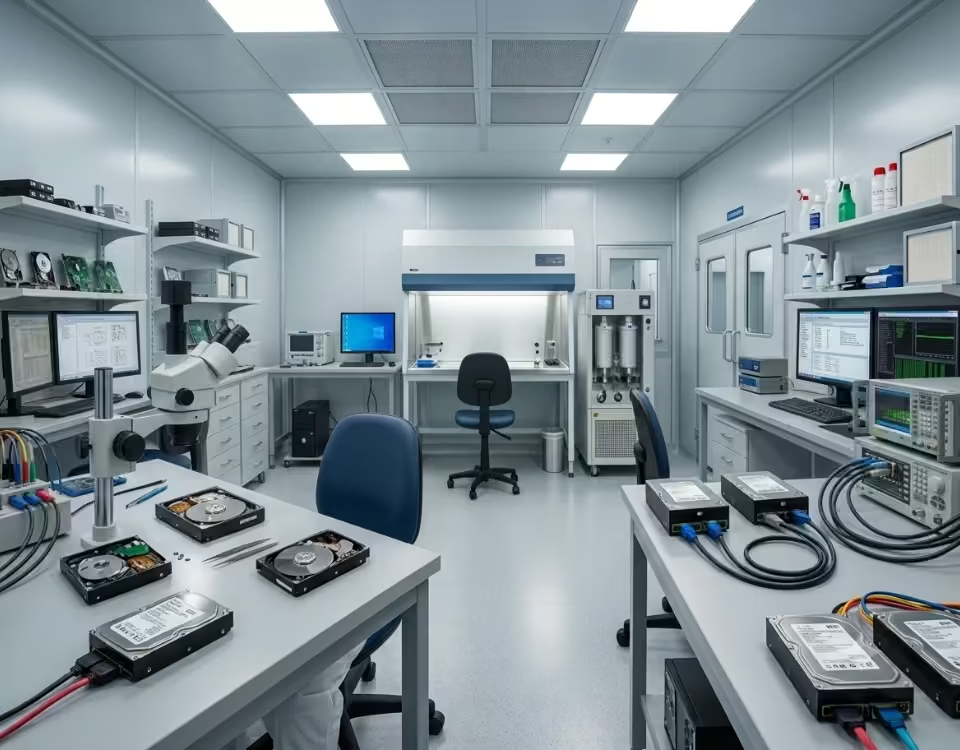

Our data recovery specialists began with a detailed RAID analysis. Each hard drive in the RAID array was carefully examined to identify physical and logical issues. Damaged sectors were cloned using professional tools to prevent further data loss. After cloning, the RAID configuration was reconstructed virtually. Our engineers rebuilt the RAID structure, corrected logical inconsistencies, and extracted the required business data.
The recovered data was verified and securely transferred to a new storage device. The client received 100% of their critical files, allowing them to resume operations without further disruption.