
How to find a Matching Donor Drives?
Hard disk donor drive guidelines are designed to help you maximize compatibility when searching for a donor head stack assembly. While a perfect match cannot be guaranteed, following these steps will increase your chances of success.
Begin by identifying the make of the hard drive and matching the specifications provided. Note that this guide does not cover quantum drives or older Western digital models (pre-Caviar). For reference, we’ve highlighted where to find the relevant details on the label in the sample images provided. Keep in mind that your label may vary based on the product line or manufacturing date.
Each specification is prioritized and color-coded to indicate its importance. While finding a donor that matches all the criteria might not be possible, the color-coding will help you focus on the most critical details. more details, contact us
RED: Essential. You almost certainly cannot use a donor without this matching.
ORANGE: high priority. This information is often required to match for a donor to be compatible.
YELLOW: Medium priority. This information can help increase the chances of compatibility if a match is available.
GREEN: Low priority. This is normally not a factor but can be used to choose between multiple donors matching everything else.
Toshiba
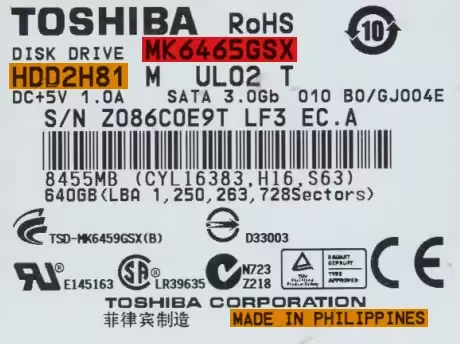
Use the following criteria to find a donor drive.
Model number: Match the whole number. If you cannot do this, you may be able to match the first eight digits of the model number and the family code instead.
Country of manufacture: Should be the same.
Hard drive code: The first part of the HDD code should match.
Hitachi
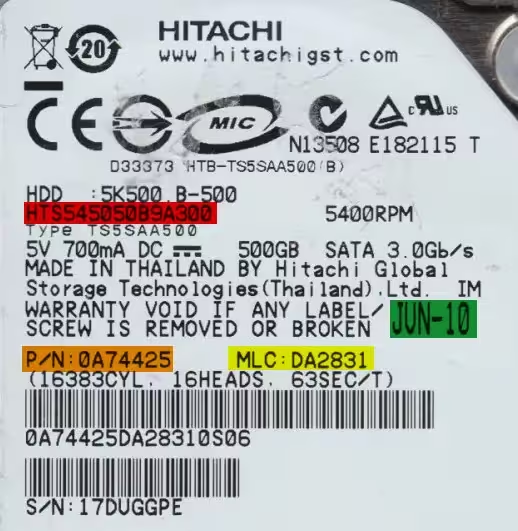
Use the following criteria to find a donor drive.
Model number: Match the model number exactly.
Part number: Match the part number exactly.
Heads map: Match the physical heads (PH) map exactly. It is OK if the donor has more heads than the original drive, but all heads before that should match.
MLC: Match the MLC exactly.
Date of manufacture: Should be within three months — the closer the better.
Older
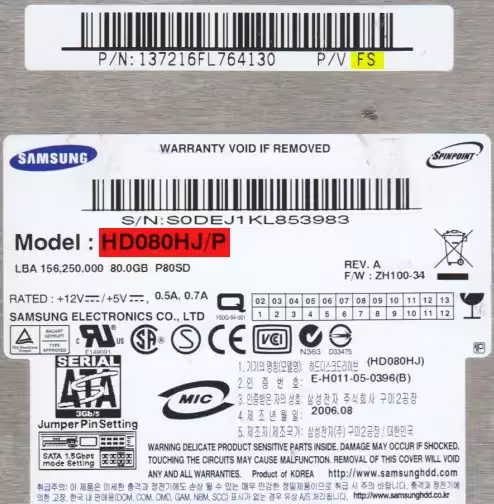
These drives can be identified by having a separate barcode sticker with two sets of numbers on it.
Use the following criteria to find a donor drive.
Model number: Match the model number exactly.
Heads map: Match the physical heads (PH) map exactly. It is OK if the donor has more heads than the original drive, but all heads before that should match.
Country of manufacture: Should be the same.
P/V: To the right of the part number. Some drives may be missing this field.
PCB revision: PCB Rev should be the same.
Newer
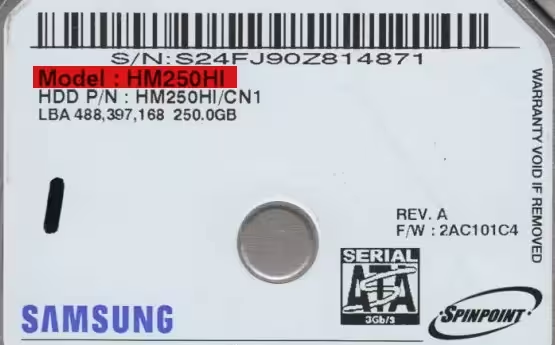
These are 2.5″ inch drives, series M7S2, M7E (i.e. Mercury / Rev .07 / S3M), MP4, MT2, M8E, and M9T, as well as 3.5″ inch drives, series F3 or later. The series can be found printed on the PCB or in some instances on the drive label.
Use the following criteria to find a donor drive.
Model number: Match the model number exactly.
Heads map: Match the physical heads (PH) map exactly. It is OK if the donor has more heads than the original drive, but all heads before that should match.
Preamplifier revision: The preamplifier revision should be the same.
Barracuda
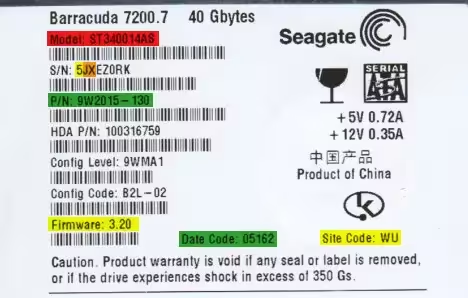
These drives can be identified by containing a period (.) in the firmware number.
Use the following criteria to find a donor drive.
Model number: Match the model number exactly.
Heads map: Match the physical heads (PH) map exactly. It is OK if the donor has more heads than the original drive, but all heads before that should match.
Serial number: Match the second and third characters of the serial number.
Firmware (7-series or earlier): Optional — For drives that are 7-series or earlier, match the firmware number.
Serial number: In addition to the 2nd and 3rd digit, match the first character of the serial number.
Site code: Match the site code. This indicates the location of manufacture.
Part number: Match the 1st half of the part number. If the second half also matches, it is likely to be an even better match.
Date code: Convert the date codes. They should be within three months of each other — the closer the better.
F3
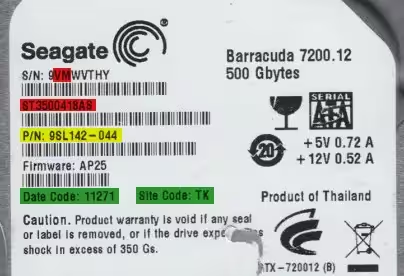
These drives can be identified by NOT containing a period ( . ) in the firmware number.
Use the following criteria to find a donor drive.
Model number: Match the model number exactly.
Serial number: Match the second and third characters of the serial number.
Heads map: Match the physical heads (PH) map exactly. It is OK if the donor has more heads than the original drive, but all heads before that should match.
Preamplifier type: Optional — Match the first two digits of the preamplifier type.
Part number: Match the 1st half of the part number. If the second half also matches, it is likely to be an even better match.
Site code: Match the site code. This indicates the location of manufacture.
Date code: Convert the date codes. They should be within three months of each other — the closer the better.
Caviar 1st Edition
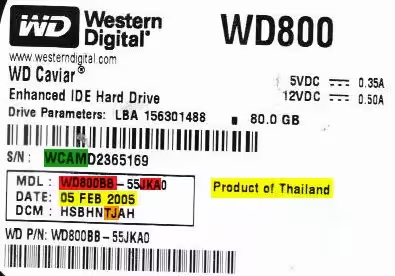
These are generally drives that are 10 or more years old. They can be differentiated by having a PCB that is, more or less, square compared to the L-shaped PCBs of later models.
Use the following criteria to find a donor drive.
Model number: Match the entire first part of the model number as well as three characters in the second part. Eg: WD800BB-55JKA0
Heads map: Match the physical heads (PH) map exactly. It is OK if the donor has more heads than the original drive, but all heads before that should match.
DCM: Locate the J or 2 in the DCM. It should be towards the end. Make sure that the J or 2 as well as the preceding character matches on the donor.
Country of manufacture: Should be the same.
Date of manufacture: Should be within three months — the closer the better.
Serial number: Match the first four digits of the serial numbers.
PCB Revision: The PCB Rev should be the same.
Marvell (version 1)
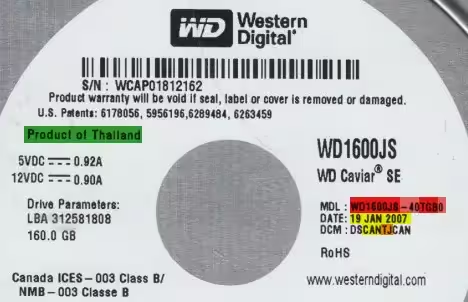
These drives can be identified by the family code in the model number (the 3rd and 4th digits after the hyphen). The following families are part of this type: Mammoth (family codes EY, EZ, FA, FC, FJ, FM, HE, HF, JE, JS, JT, JY), Sabre (JH, JJ, JK, JL, JM, JN, JP, JR, JU, KS, LN, MG), Hawk (MH, MJ, MK, ML, MV, MW, MY, MZ, NC, ND, NE, NF, NG, NH, NJ, NK, NT, NV, NY, PA), Hawk-2 (SG, SH, TG), Starling (RD, RE, RF, RJ, RK, RL), Buccaneer (KE, KF, KG, KM), Zeus (MN, MP, VJ), and Raider (PC, PD, PE, PF, PG). Even if these families of drives say “Caviar SE” on the label, they belong to the Marvell architecture.
Use the following criteria to find a donor drive.
Model number: It is ideal to match the whole model number, but if none is available you can try one that matches the entire first part of the model number as well as these three characters in the second part: WD1600JB-40TGB0
Heads map: Match the physical heads (PH) map exactly. It is OK if the donor has more heads than the original drive, but all heads before that should match.
DCM: Locate the J or 2 in the DCM. It should be towards the end. Make sure that the J or 2 as well as the preceding character matches on the donor. If the three characters before that match as well, it will have an even better chance of being a match.
Date of manufacture: Should be within three months — the closer the better.
Preamplifier: Exact match for both vendor and revision.
Microjogs: Each value should be within 300 of the original drive — the closer the better.
Country of manufacture: Should be the same.
Marvell (version 2)
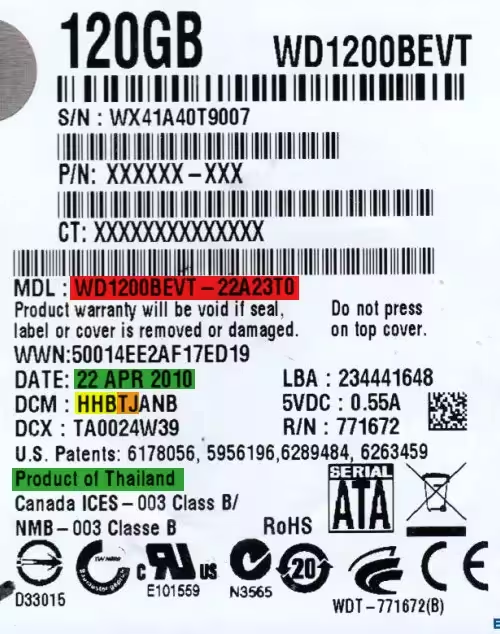
These encompass most newer and modern Western Digital drives.
Use the following criteria to find a donor drive.
Model number: It is ideal to match the whole model number, but if none is available you can try one that matches the entire first part of the model number as well as these three characters in the second part: WD1200BEVT-22A23T0
Heads map: Match the physical heads (PH) map exactly. It is OK if the donor has more heads than the original drive, but all heads before that should match.
DCM: Locate the J or 2 in the DCM. It should be towards the end. Make sure that the J or 2 as well as the preceding character matches on the donor.
Preamplifier: Exact match for both vendor and revision.
Microjogs: Each value should be within 200 of the original drive — the closer the better.
Country of manufacture: Should be the same.
Date of manufacture: Should be within three months — the closer the better.
Data loss can happen unexpectedly, whether due to hardware failure, accidental deletion, software corruption, or physical damage. When important files become inaccessible, professional assistance is often the best solution. Therefore, many individuals and businesses ask whether data recovery services across Kerala are available for different types of storage devices. The good news is that professional recovery services can support customers throughout Kerala, helping restore valuable data from a wide range of devices and storage systems.
Comprehensive Data Recovery Solutions
Modern recovery providers offer specialized services for both personal and business users. For example, recovery experts can retrieve lost data from hard drives, solid-state drives (SSDs), USB flash drives, memory cards, laptops, desktops, and servers.
Additionally, advanced recovery solutions are available for enterprise storage environments such as RAID arrays, NAS devices, and SAN systems. As a result, organizations can recover critical business information even after serious storage failures.
Common Causes of Data Loss
Data loss can occur for several reasons. Understanding these causes can help users take preventive measures while also recognizing when professional recovery is necessary.
Some common causes include:
- Accidental file deletion
- Hard drive mechanical failure
- SSD controller damage
- Virus and malware attacks
- File system corruption
- RAID array failures
- Power surges and electrical damage
- Water, fire, or physical damage
Consequently, recovery methods vary depending on the specific cause of the problem.
Devices Supported by Recovery Services
Professional Kerala data recovery services typically support a broad range of storage devices. For instance, traditional hard disk drives often require specialized tools to repair mechanical issues and retrieve data.
Similarly, SSD data recovery involves advanced techniques to address controller failures, firmware corruption, and flash memory issues. Furthermore, experts can recover data from smartphones, external drives, memory cards, and surveillance storage systems.
Because each device uses different technologies, professional evaluation is usually required before beginning the recovery process.
Business and Enterprise Recovery Services
Businesses often depend on complex storage infrastructures to manage critical information. Therefore, professional providers also offer RAID recovery services for servers and enterprise storage systems.
For example, RAID 0, RAID 1, RAID 5, RAID 6, and RAID 10 configurations can often be recovered after logical failures, disk crashes, or controller malfunctions. Moreover, NAS and SAN environments can be restored using specialized recovery tools and forensic techniques.
As a result, companies can reduce downtime and recover important operational data.
Benefits of Choosing Professional Recovery Services
Working with experienced recovery specialists offers several advantages. First, professionals use advanced diagnostic equipment to identify the root cause of data loss. Additionally, recovery procedures are performed in secure environments to minimize the risk of further damage.
Furthermore, many providers offer device pickup, secure handling, and recovery support throughout Kerala. Consequently, customers can access expert assistance regardless of their location within the state.
Losing important data can be a stressful experience, whether it involves personal photos, business documents, or critical project files. However, the actions you take immediately after the incident can significantly impact the chances of successful recovery. Therefore, understanding what to do after data loss is essential for minimizing damage and improving recovery outcomes.
Stop Using the Device Immediately
The first and most important step is to stop using the affected device. When files are deleted or become inaccessible, the data is often still present on the storage medium until it is overwritten.
For example, if you continue saving files, installing software, or downloading content, new data may overwrite the lost information. As a result, recovering the original files becomes much more difficult. Therefore, avoid using the device until recovery efforts begin.
Identify the Cause of Data Loss
Next, determine how the data loss occurred. Different causes require different recovery approaches. Common reasons include:
- Accidental file deletion
- Formatting errors
- Hard drive failure
- SSD corruption
- Virus or malware attacks
- RAID system issues
- Power outages
By identifying the source of the problem, you can choose the most effective data loss recovery method.
Check Available Backups
Before attempting recovery, verify whether a backup already exists. Many users automatically back up files to external drives, cloud storage platforms, or network servers.
Additionally, operating systems often create restore points or backup copies. Consequently, checking these resources may provide a quick and simple way to restore lost files without needing advanced recovery procedures.
Avoid DIY Fixes That Could Cause Damage
Although many online tutorials promise quick results, some recovery attempts can worsen the situation. For instance, repeatedly restarting a failing hard drive or using unreliable software may increase the risk of permanent damage.
Furthermore, opening a storage device without proper equipment can expose sensitive components to dust and contamination. Therefore, proceed carefully and avoid unnecessary troubleshooting steps.
Use Reliable Data Recovery Software
If the device is functioning properly and the issue is logical rather than physical, trusted recovery software may help recover lost data. These tools scan storage devices for deleted or inaccessible files and attempt to restore them.
However, always save recovered files to a different storage location. Otherwise, you may accidentally overwrite additional recoverable data.
Seek Professional Help for Physical Damage
If the device makes unusual noises, is not detected by the computer, or has suffered physical damage, professional assistance is recommended. Experienced technicians use specialized tools and cleanroom environments to recover data safely.
As a result, professional data recovery services often provide the highest success rates for complex cases involving hardware failure.
Prevent Future Data Loss
Once recovery is complete, implement a strong backup strategy. For example, maintain regular backups on external drives and cloud storage services. Additionally, use antivirus protection and monitor storage device health regularly.
Consequently, you can reduce the risk of future incidents and improve overall data security.
Data loss can happen unexpectedly due to accidental deletion, hardware failure, corruption, malware attacks, or physical damage. When important files become inaccessible, one of the most common questions people ask is: How long does the data recovery process take? While there is no single answer, recovery time depends on several factors, including the type of device, the severity of the damage, and the amount of data involved.
Average Data Recovery Time
In general, the data recovery process can take anywhere from a few hours to several days. For example, recovering accidentally deleted files from a healthy storage device may only require a few hours. However, more complex cases involving damaged hardware can take significantly longer.
Additionally, enterprise storage systems such as RAID arrays, NAS devices, and servers often require advanced recovery procedures. Consequently, these recoveries may take several days or even weeks to complete.
Factors That Affect Data Recovery Time
Type of Storage Device
The type of device plays a major role in determining data recovery time. For instance, recovering files from a USB flash drive or memory card is often faster than recovering data from a damaged hard drive.
Similarly, SSD data recovery may require specialized tools due to encryption, firmware issues, and flash memory architecture. Therefore, different devices require different recovery approaches.
Cause of Data Loss
The reason for data loss also impacts recovery duration. Logical issues such as accidental deletion, formatting, or file system corruption are usually resolved more quickly.
On the other hand, physical damage caused by water exposure, fire, electrical failure, or mechanical problems often requires extensive repairs before data can be recovered. As a result, recovery may take considerably longer.
Amount of Data
The volume of stored information is another important factor. A device containing a few gigabytes of data can typically be processed faster than one storing several terabytes.
Furthermore, larger storage systems require more time for scanning, analysis, and verification. Consequently, recovery duration increases as data volume grows.
Condition of the Device
A healthy device with logical errors can often be recovered relatively quickly. However, if the storage media has bad sectors, damaged components, or firmware corruption, technicians must first stabilize the device.
Therefore, severely damaged devices often require additional recovery time.
Professional Data Recovery Process
Professional data recovery services typically follow several steps. First, technicians evaluate the device and diagnose the problem. Next, they create a secure image of the storage media whenever possible.
Afterward, specialized software and hardware tools are used to retrieve files. Finally, recovered data is verified and transferred to a safe storage device. As a result, the process ensures the highest possible recovery success rate.
How to Speed Up Recovery
If data loss occurs, stop using the affected device immediately. Continuing to use the device may overwrite recoverable files and complicate recovery efforts.
Additionally, avoid attempting multiple DIY recovery methods, especially if the device shows signs of physical failure. Instead, seek professional assistance as soon as possible to improve recovery chances.
Data loss can occur at any time due to hardware failure, accidental deletion, corruption, malware attacks, or physical damage. Therefore, choosing a trusted recovery provider is essential for restoring important files safely. PCPrompt data recovery services offer solutions for a wide range of storage devices and data loss situations, helping individuals and businesses recover critical information efficiently. According to PCPrompt Data Recovery Kochi, the company specializes in recovering data from HDDs, SSDs, RAID systems, USB drives, and other storage devices.
Hard Drive Data Recovery
One of the primary services offered by PCPrompt is hard drive data recovery. Hard disk drives can fail because of mechanical damage, firmware corruption, bad sectors, PCB issues, or accidental formatting.
Additionally, PCPrompt handles recovery from dead, clicking, and inaccessible hard drives using advanced diagnostic and recovery techniques. As a result, users can often recover important documents, photos, videos, and business files.
SSD Data Recovery
Solid-state drives require specialized recovery methods because they use flash memory technology rather than traditional spinning disks. Therefore, recovering data from SSDs often involves dealing with controller failures, firmware corruption, and NAND memory issues.
PCPrompt provides SSD data recovery services for SATA, NVMe, and M.2 drives, helping customers restore lost files from damaged or malfunctioning SSDs.
RAID Recovery Services
Businesses frequently rely on RAID systems for data storage and redundancy. However, RAID arrays can fail due to multiple drive failures, controller malfunctions, rebuild errors, or corrupted configurations.
For this reason, PCPrompt offers RAID recovery services for various RAID levels, including RAID 0, RAID 1, RAID 5, RAID 6, and RAID 10. Consequently, organizations can recover critical business data from complex storage environments.
USB Flash Drive and Memory Card Recovery
USB drives and memory cards are widely used for portable storage. Nevertheless, they can suffer from accidental deletion, file corruption, physical damage, or formatting errors.
As a result, PCPrompt provides USB data recovery and flash memory recovery services to retrieve lost files from damaged or inaccessible removable storage devices.
External Hard Drive Recovery
External hard drives often contain valuable personal and business data. However, physical shocks, connector damage, and software corruption can make files inaccessible.
Therefore, PCPrompt also offers recovery solutions for external storage devices, helping customers restore important data quickly and securely.
NAS and Server Recovery
Modern businesses increasingly depend on NAS devices and server-based storage systems. When these systems fail, downtime can affect daily operations significantly.
To address this issue, PCPrompt provides professional recovery services for NAS storage, servers, and enterprise-level storage environments. Consequently, organizations can recover important files, databases, and business applications after unexpected failures.
Logical and Physical Data Recovery
Another key advantage of professional data recovery services is the ability to handle both logical and physical failures.
Logical recovery includes:
- Deleted files
- Formatted drives
- Partition loss
- File system corruption
- Virus damage
Physical recovery includes:
- Head crashes
- Motor failures
- PCB damage
- Water damage
- Fire-damaged devices
Because each case is different, recovery specialists evaluate the device before determining the most effective solution.
When important files become inaccessible, one of the first concerns people have is the cost of recovery. Whether the issue involves a hard drive, SSD, RAID server, USB drive, or memory card, the pricing can vary depending on the type of failure and the complexity of the recovery process. Therefore, understanding the data recovery cost at PCPrompt Kochi can help customers make informed decisions when facing data loss situations.
According to PCPrompt Kochi, recovery charges depend on several factors, including device type, damage severity, storage capacity, and the techniques required to restore data.
Factors That Affect Data Recovery Cost
Every data loss case is unique. For example, recovering accidentally deleted files is generally less expensive than recovering data from a physically damaged hard drive.
Some of the main factors that influence data recovery charges in Kochi include:
- Type of storage device
- Severity of data loss
- Physical or logical damage
- Storage capacity
- RAID configuration complexity
- Required recovery tools and procedures
As a result, the final recovery cost can only be determined after a detailed diagnosis of the affected device.
PCPrompt Kochi Data Recovery Pricing Overview
Based on pricing information published by PCPrompt Pricing Guide, recovery services are generally categorized into three levels:
Logical Recovery
Logical recovery typically costs between ₹8,000 and ₹10,000. This category includes:
- Deleted or formatted files
- Virus corruption
- Operating system crashes
- Partition loss
- BitLocker-related issues
Additionally, these recoveries are usually completed within one to two days.
Hardware Recovery
Hardware-related recoveries generally range from ₹10,000 to ₹15,000. Examples include:
- PCB damage
- Firmware corruption
- Bad sectors
- Electronic failures
- I/O and CRC errors
Consequently, these cases often require more advanced recovery techniques.
Physical Recovery
Physical damage is usually the most complex category. Pricing often starts from ₹20,000 and above, depending on the condition of the device.
Examples include:
- Clicking hard drives
- Head crashes
- Motor failures
- Water damage
- Fire damage
- Dropped storage devices
Because these cases may require cleanroom procedures and specialized equipment, recovery costs are generally higher.
Transparent Evaluation Process
One important advantage highlighted by PCPrompt Data Recovery Kochi is its transparent pricing model. First, technicians perform a detailed diagnostic evaluation. Next, customers receive a clear quotation before recovery begins.
Furthermore, PCPrompt states that there are no hidden charges, allowing customers to decide whether to proceed with the recovery process.
Why Professional Recovery Matters
Choosing professional recovery services can improve recovery success rates significantly. While low-cost providers may seem attractive, improper handling can permanently damage storage devices and reduce recovery possibilities.
Therefore, working with experienced specialists helps protect valuable data while ensuring secure recovery procedures and confidentiality standards.
When valuable files are lost, recovering them quickly becomes a top priority. However, many individuals and businesses have another important concern: Is my data safe and confidential during the recovery process? This question is especially relevant when recovering sensitive documents, financial records, business information, customer databases, or personal files. Fortunately, reputable recovery providers prioritize data recovery confidentiality and implement strict security measures to protect client information throughout the recovery process.
Why Data Confidentiality Matters
Data stored on hard drives, SSDs, RAID servers, NAS systems, smartphones, and USB drives often contains sensitive information. For example, businesses may store contracts, employee records, and customer details, while individuals may have personal photos, legal documents, and financial information.
Therefore, protecting privacy is a critical part of any secure data recovery service. Without proper safeguards, sensitive information could be exposed to unauthorized access.
How Professional Recovery Services Protect Your Data
Professional recovery companies follow strict procedures to ensure data privacy during recovery. First, devices are logged and tracked from the moment they arrive at the recovery facility. This helps maintain a secure chain of custody throughout the process.
Additionally, access to recovery labs is often restricted to authorized personnel only. As a result, the risk of unauthorized handling is significantly reduced.
Confidentiality Agreements
Many professional providers require employees to sign confidentiality agreements. Furthermore, businesses can often request Non-Disclosure Agreements (NDAs) before the recovery process begins.
Consequently, customers gain additional assurance that their information will remain private and protected.
Secure Recovery Environments
Professional recovery facilities use secure workstations and isolated networks to prevent data leaks. Moreover, advanced security protocols help ensure recovered files are handled responsibly.
Because of these precautions, confidential data recovery services can safely manage highly sensitive information for individuals, corporations, healthcare organizations, and government agencies.
Data Security During File Transfer
After recovery is complete, the recovered data must be transferred back to the client. Reputable providers typically use encrypted storage devices or secure digital transfer methods to protect files during delivery.
Additionally, many companies offer password-protected storage solutions. Therefore, only authorized users can access the recovered information.
What Happens to Your Data After Recovery?
A trustworthy provider will explain its data retention and deletion policies. In most cases, recovered files are stored temporarily until the customer verifies successful recovery.
Afterward, the data is securely deleted from the recovery provider’s systems according to established security procedures. Consequently, unnecessary copies of sensitive information are not retained.
Choosing a Trusted Data Recovery Company
To ensure maximum data recovery security, look for a provider that offers:
- Confidentiality agreements or NDAs
- Secure facilities and restricted access
- Encrypted data transfer options
- Clear privacy policies
- Experienced recovery specialists
- Positive customer reviews and reputation
Furthermore, asking about security procedures before authorizing recovery can help you make an informed decision.